Interactive view of the organ
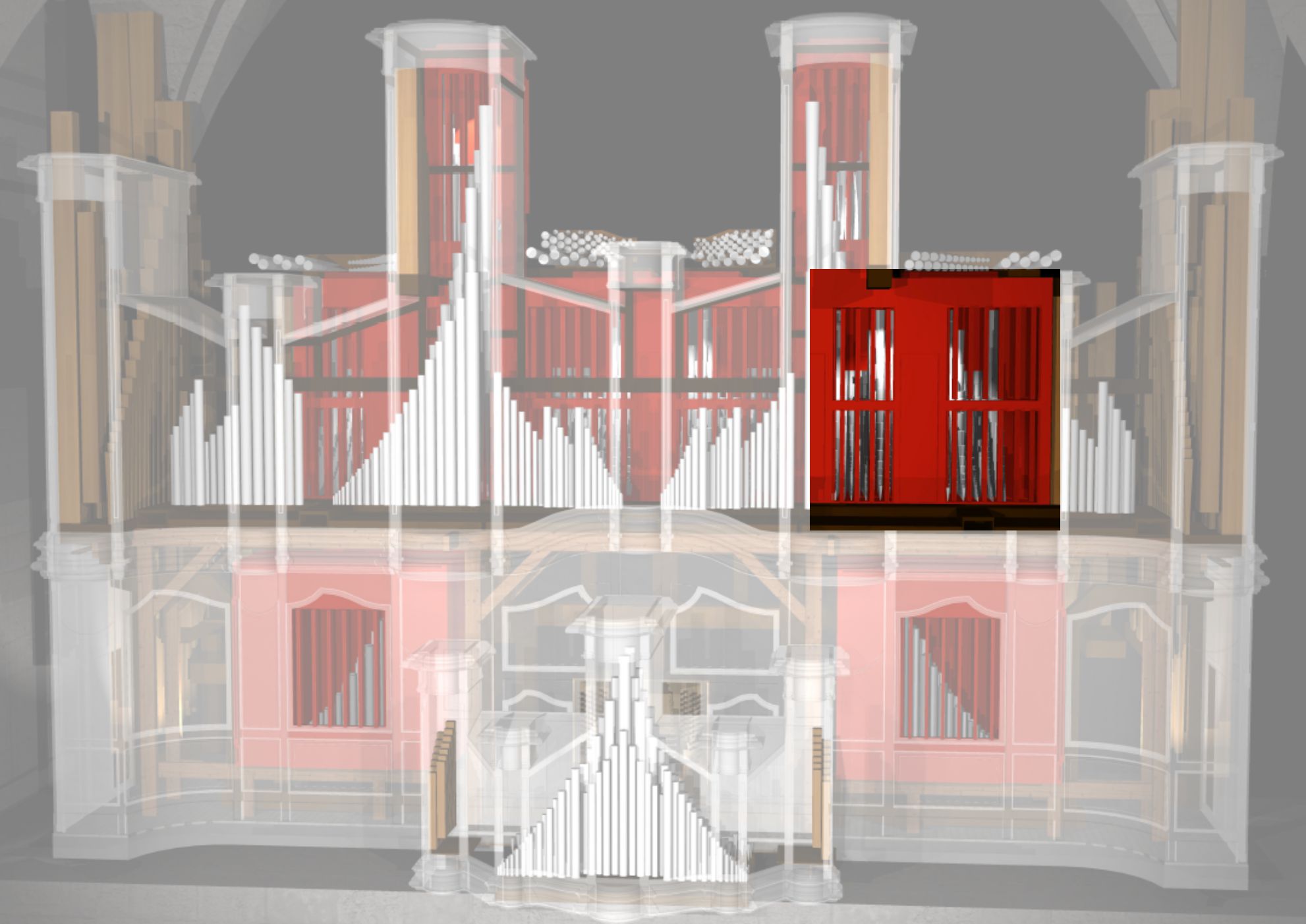
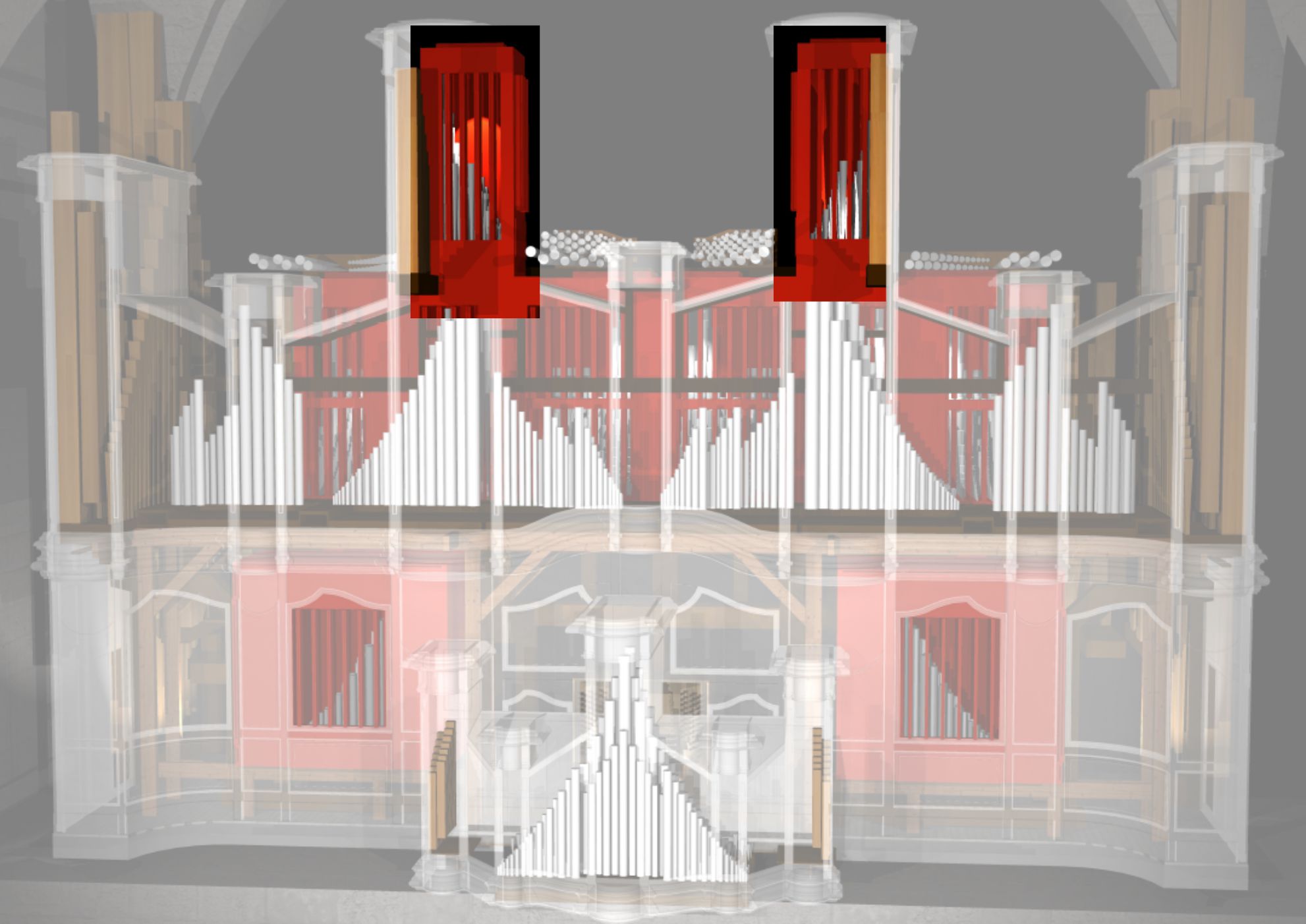
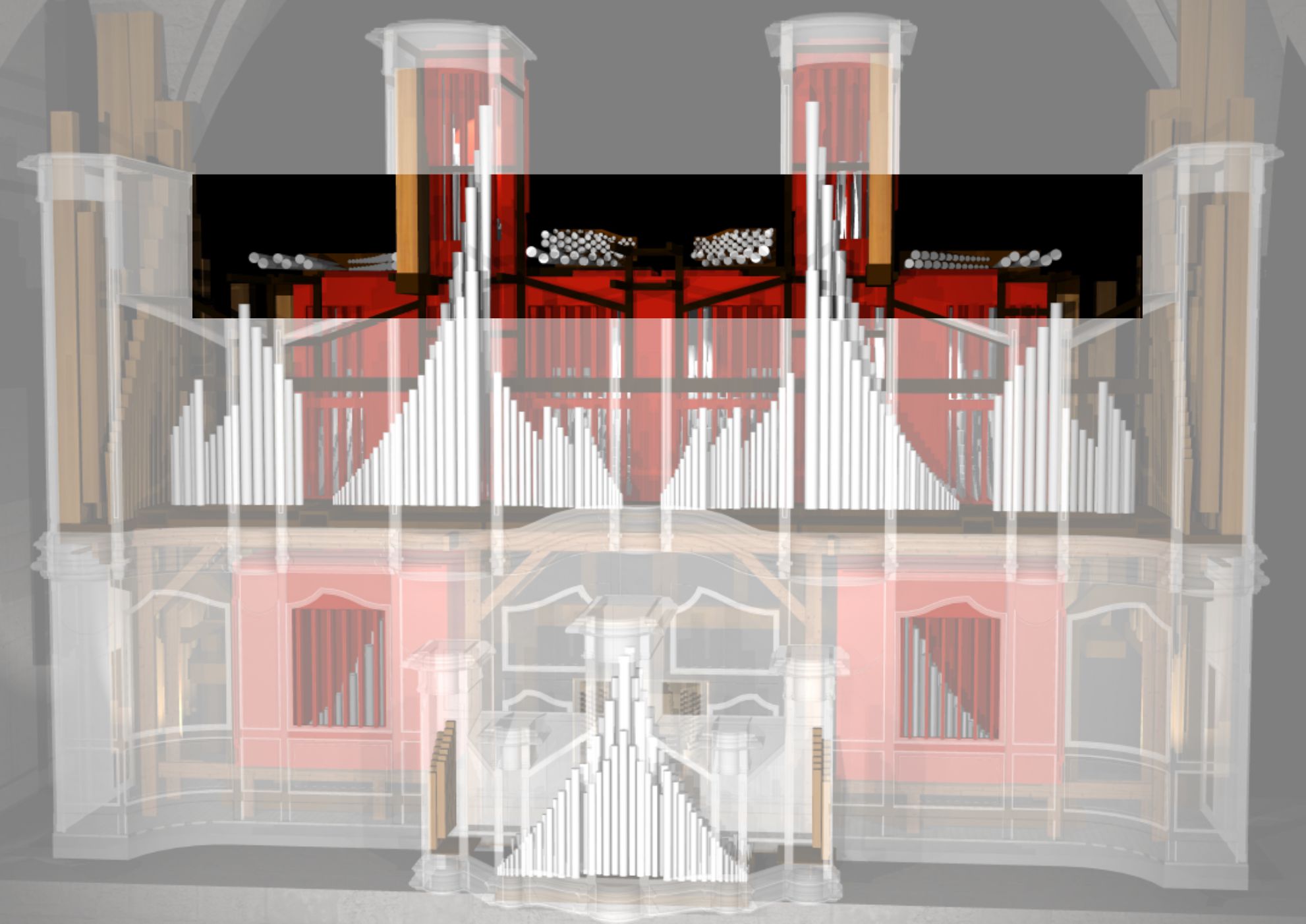
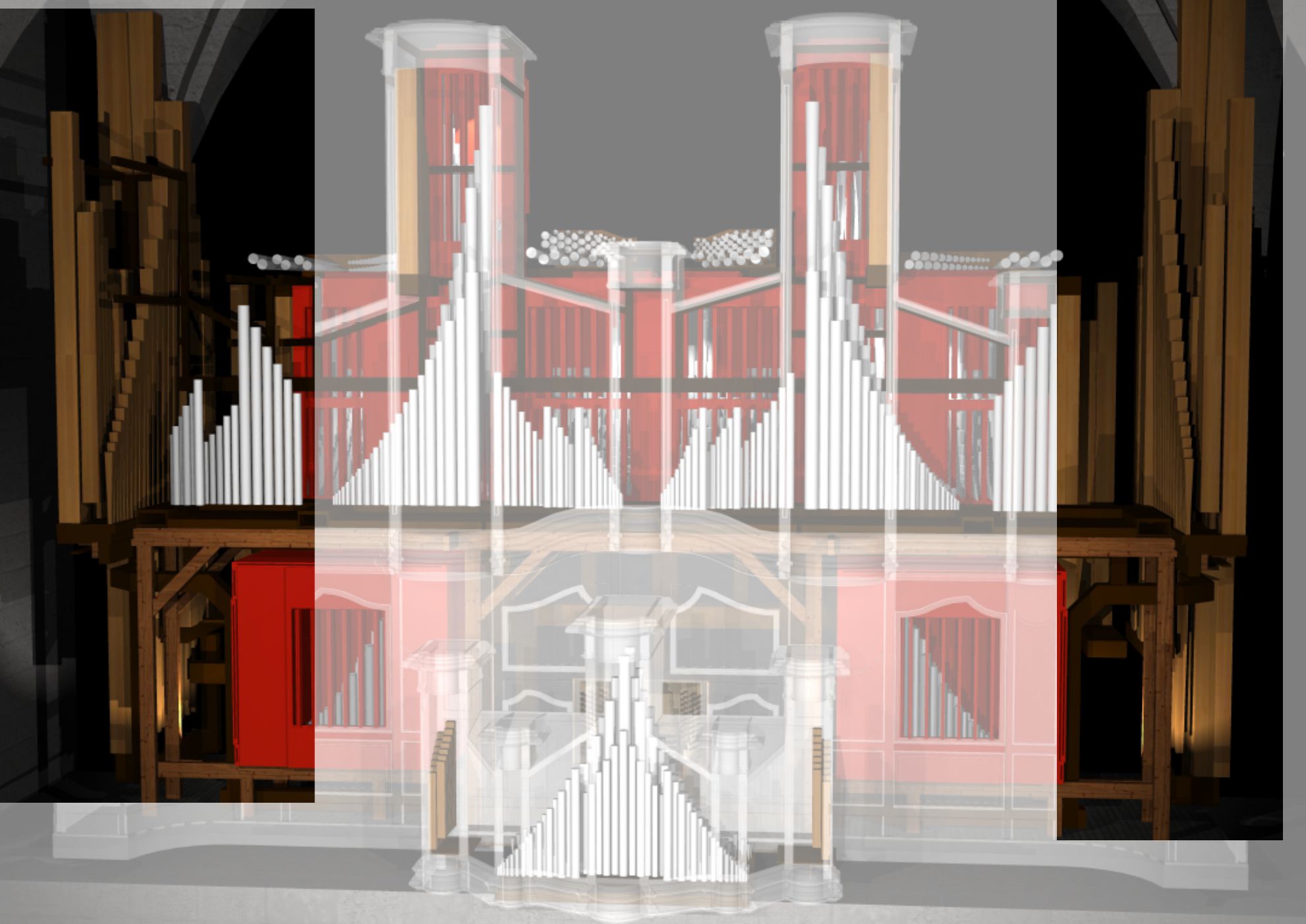
Explore where each division is located within the organ and familiarise yourself with the instrument’s architecture before choosing the stop and pipe you would like to sponsor.
Click on a division to read about its role and tonal concept, or simply scroll through the descriptions below.
3D model for illustrative purposes only. Non-contractual drawing.
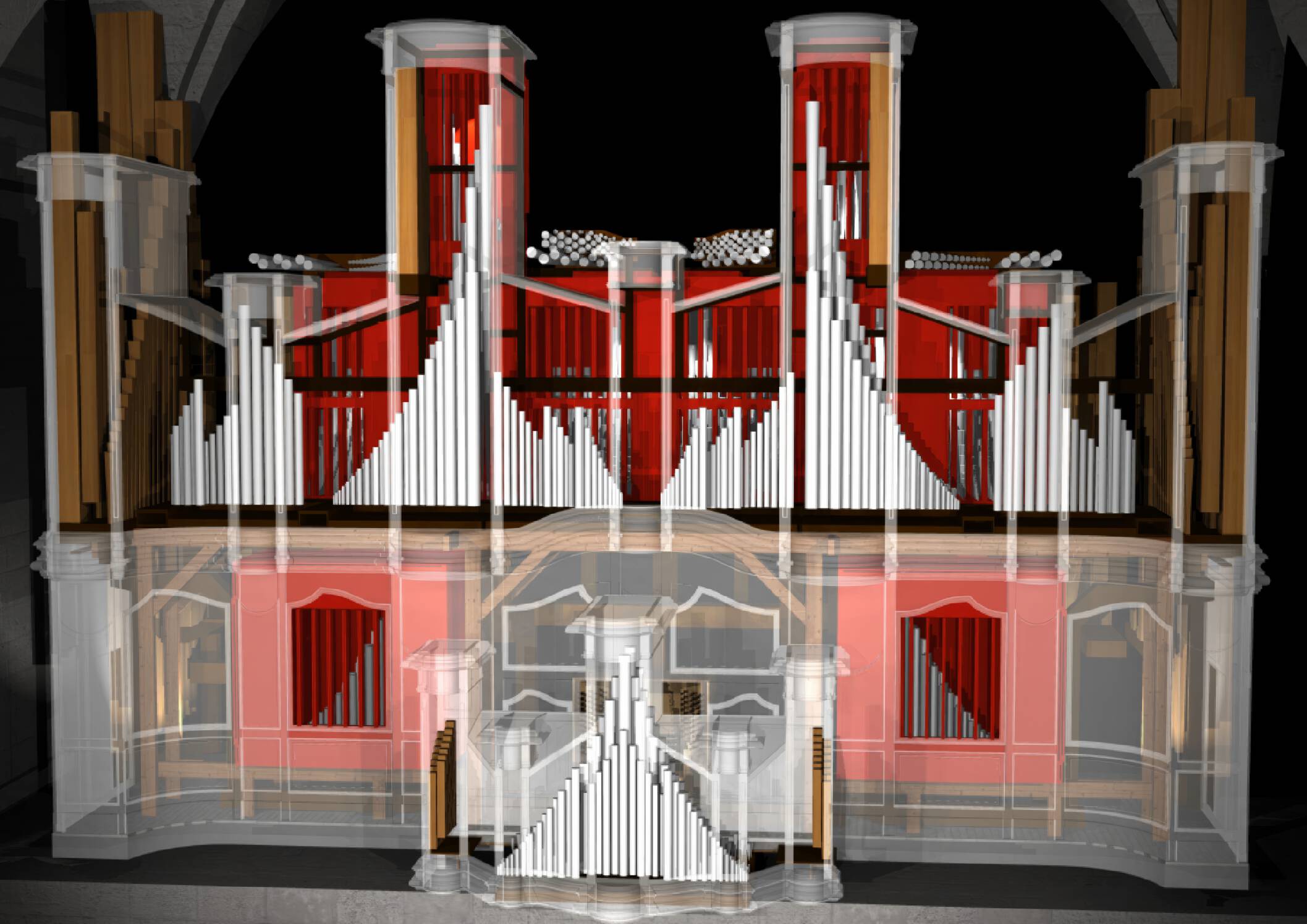
Grand-Orgue
Grand-Orgue
Regarded as the organ’s principal division, the Grand-Orgue is located immediately behind the façade pipes known as Montres.
In this instrument it is subdivided into four independent sections, each of which can be assigned to any manual.
This sub-division offers a varied palette of foundation stops inspired by French and German Romantic organ building, providing a wide range of tone colours and subtle shades.

This sub-division consists entirely of Principal-family foundation stops which together form the classical full Principal chorus (Plenum).

This sub-division features mutation stops, whose upper partials create distinctive colours and unusual effects.
This sub-division houses the Grand-Orgue powerful and brilliant reed chorus.

Positif de dos
Positif de dos
The Positif de dos is housed in the smaller case at the front of the organ loft, behind the organist. Conceived as a smaller counterpart to the Grand-Orgue, its position gives it clarity, immediacy and presence. Here it is divided into two sections.
This sub-division contains the smaller Principal chorus, which answers the Grand-Orgue plenum, together with solo reed stops.
The second Positif de dos sub-division contains mutation stops for a wide range of tonal combinations, together with the Positif’s smaller reed chorus.
Récit expressif
Récit expressif
Once a modest division, the Récit expressif became one of the central part of the French symphonic organ. Its pipes are enclosed in a large swell box with shutters that allow the organist to vary the volume. Together with the Grand-Orgue and Positif, it forms the backbone of the Romantic organ. Here it is divided into three independently playable sections.
It follows the classic French Romantic model, with celeste stops and solo reeds, while broadening the palette through stops inspired by German and English traditions.

This section is built around harmonic flutes, characteristic of French Romantic organ building.
This section contains the Récit expressif reed chorus, darker and rougher in character than that of the Grand-Orgue; with the swell box closed, it creates a distant, growling rumble.
Écho expressif
Écho expressif
The Écho expressif comprises two sections, each enclosed in a swell box in the lower part of the organ. With the boxes closed, it creates a distant perspective and a palette of delicate, gentle, poetic and varied colours, often inspired by German organ building.
The first section is conceived for distant, delicate sounds. It brings together low-pitched stops, undulating stops and distinctive colors such as free-reed stops.

The second section is centered on soft flutes, a powerful flute and a distinctive solo reed. Together they offer a broad dynamic and tonal range while retaining an intimate character.